


Canasta
4.54.13K Reviews
App Specs
- Version
- 2.2.5
- Updated On
- License
- Free
- Downloads
- 500,000+
- Developer
- North Sky Games
- Categories
- Card
- Platform
- Android
Screenshots
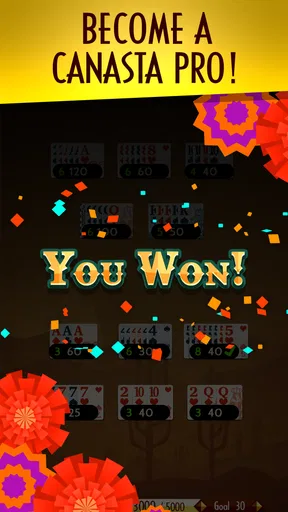
 Analysis by AppCompare
Canasta is the kind of card game I can open without needing to prepare myself for a long, complicated session. Developed by North Sky Games, it brings the familiar Canasta format to mobile with a focus on classic play and multiplayer matches. My first impression is pleasantly straightforward: the game puts the cards and the decisions at the center, rather than trying to turn a traditional table game into something unrecognizable.
That simplicity is important here. Canasta works best when I want a thoughtful diversion, not when I am looking for a dramatic adventure, a story campaign, or a fast arcade challenge. The setting is the card table itself, and the mood comes from watching the discard pile, weighing a tempting draw, and deciding whether a promising group is worth protecting. It is a quiet kind of tension, but it can become surprisingly absorbing once a hand starts to develop.
The game is free to download and is rated Everyone, which makes it easy to recommend for households or friend groups that already enjoy traditional card games. Its average rating sits at 4.5 from around 18 thousand ratings, while the wider player base has passed 500 thousand installs. Those figures suggest that it has found a solid audience without changing the basic identity of Canasta to chase a broader genre.
How the first few hands feel
I think Canasta makes the strongest first impression when approached as a digital card table rather than as a large mobile production. The appeal is not a parade of unlocks or a busy collection of side activities. It is the gradual construction of a hand: collecting matching cards, deciding when to expose a meld, and trying to read what the opponent may be holding from the cards entering and leaving the discard pile.
That gives the opening hands a useful learning curve. A new player can understand the visible action quickly, but the better decisions are less obvious. Picking up a discard pile may offer a major opportunity, yet it can also force a player to take cards that do not fit the plan. Holding a useful card can deny an opponent an easy extension, but keeping too much in reserve may leave the hand underdeveloped. I enjoy that the game rewards patience without making every turn feel slow.
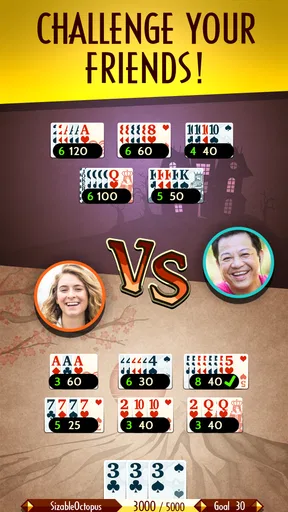
The multiplayer focus also changes the first impression. A solo card game can feel like a puzzle against a predictable system, whereas a human opponent creates uncertainty in a more meaningful way. Even familiar patterns become less comfortable when another player may be saving a card, baiting a discard, or preparing to close the hand. That is where the central promise of the game becomes most convincing: the classic rules have enough room for personal style to matter.
There is a practical point worth knowing before starting. Canasta is not a game I would choose for a quick tap-through session while distracted by several other things. The most interesting turns require attention, especially when the discard pile becomes valuable or when the score situation makes a conservative move wiser than an attractive one. If I give it a few uninterrupted minutes, the pace feels measured. If I keep checking messages during a hand, I lose track of the small clues that make the game satisfying.
Worth Reading Before You Choose

EA SPORTS FC Mobile 26 Is a Bigger Football Game, but It Takes Time

Flipboard Shows What News Apps Must Do Beyond the Feed

Switching to Android Auto Means Rethinking Your Driving Routine

Google Calendar Makes a Crowded Week Easier to Manage

Ludo King Makes the Most of the Minutes Between Plans

Baby Panda World Brings Quick Play to Modern Phones, but Its Game Library Feels Busy
A familiar table with a mobile rhythm
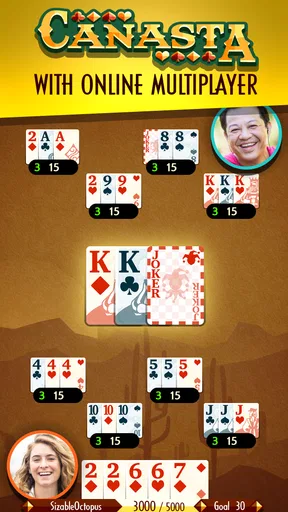
The visual language supports that first impression by keeping the card game recognizable. The cards are the important objects, and the surrounding presentation exists to frame the hand rather than compete with it. That restraint suits Canasta. A more elaborate interface might look impressive in screenshots but would make it harder to scan the melds, the discard pile, and the cards still in hand.
I also appreciate the way a traditional game benefits from being digital without losing its social purpose. In a physical match, players often pause to count, reconsider, and watch one another's reactions. On a phone, those pauses become part of the interface rhythm. The result is not as intimate as sitting around a real table, but it is more convenient when the people I want to play with are not in the same room.
The setting is therefore deliberately modest. There is no fictional world to explore, and that is not a weakness in this case. The atmosphere comes from concentration and anticipation. The game creates a small mental room where the discard pile feels important and every new card can alter the plan. For a card title, that is a coherent choice.
Art direction and the language of the cards
Canasta's art direction works because it understands the difference between decoration and information. In this type of game, visual clarity is not merely attractive; it affects the quality of decisions. I need to distinguish cards quickly, recognize which groups are forming, and understand what is available without fighting through unnecessary visual noise.
The strongest visual idea is the table-like arrangement of play. Cards feel organized into areas with different purposes, so my attention naturally moves between the hand, the melds, and the discard pile. That spatial language mirrors the way I think during a real game. I am not just looking for a card; I am comparing possible futures and checking whether a move gives the opponent an opening.
This is also where the game avoids a common problem in mobile card titles: making every action feel like a reward animation. Canasta benefits from letting the structure of the hand provide the drama. A newly completed group matters because of what it means strategically, not because the screen needs to celebrate it with excessive spectacle. The understated presentation helps the game retain a mature, table-game identity.
That does not mean the presentation will satisfy everyone. Players who expect a strong theme, elaborate characters, or a changing fantasy setting may find the visual world too narrow. I would not install this for visual discovery. I would install it for a clean card table that makes the decisions legible and lets the social competition carry the mood.
One useful habit is to treat the interface as a source of information rather than as a collection of buttons. Before making a move, I take a moment to scan the entire table area, not just the card that looks immediately playable. That helps me notice whether a discard is safe, whether a meld is worth exposing, and whether I am accidentally helping the other side. The uncluttered design makes this kind of quick review practical.
Why the setting remains effective
The setting also supports different kinds of players. Someone learning Canasta can focus on the visible arrangement and gradually connect actions with consequences. Someone experienced with the physical game can use the mobile version as a convenient continuation of an existing hobby. The game does not need to explain itself through a fictional wrapper, because its rules already provide the context.
For me, the best atmosphere appears late in a hand. The table may still look simple, but the meaning of the cards has changed. A discard that seemed harmless earlier can become a dangerous gift. A player who looked behind can suddenly have the pieces for a strong finish. That shift is created by the card economy, not by the artwork, yet the calm presentation gives the tension room to breathe.
There is a trade-off in that calmness. The game may feel less immediately exciting than a heavily animated card battler or a collectible card game built around visual effects. Those alternatives can be better when I want constant stimulation or a stronger fantasy identity. Canasta is better when I want the table to stay readable and the mood to come from decisions.
Sound, pauses, and the pace of a match
Sound has a different job in a traditional card game than it does in an action title. It should mark the flow of play without becoming the main attraction. In my experience, the audio presentation fits the measured nature of the matches: the game feels like a sequence of small confirmations, pauses, and choices rather than a continuous rush.
That pacing matters more than a dramatic soundtrack would. A good Canasta turn needs a little space. I may draw a card, reconsider the shape of my hand, examine the discard pile, and only then commit to a meld or discard. If the game pushed every action forward too aggressively, it would undermine the thoughtful character that makes the format enjoyable.
I find this rhythm especially suitable for an everyday scenario such as playing during a quiet break at home. I can begin a match when I have enough attention for it, follow the hand without needing to memorize a complicated campaign, and return to the next decision after a short pause. It is not quite the same as playing with cards on a kitchen table, but the pacing preserves some of that relaxed, conversational quality.
At the same time, multiplayer introduces a question of patience. Human matches naturally contain moments when the other player is considering a move. That can be part of the social tension, but it can also feel slow if I am expecting an instant mobile game. I would choose this title over a rapid-fire card app when I want deliberation; I would choose the faster alternative when I only have a minute or two and cannot tolerate waiting between decisions.
The sound and rhythm also make the game approachable for players who do not want an intense sensory experience. Canasta does not need flashing effects to communicate that a hand is changing. The cards, the table arrangement, and the timing of turns do most of the work. That creates a playable mood that feels consistent from the opening draw to the final scoring moment.
Making the pace work for you
My practical advice is to avoid judging the game during the first few turns alone. Early play can seem uneventful because the hand has not yet produced meaningful choices. The rhythm becomes more engaging when the discard pile develops and the cost of revealing information becomes clearer. I also recommend resisting the urge to play every immediately useful card. Saving a flexible card for a later turn can be more valuable than making the board look impressive at once.
That tip is not about a hidden shortcut; it is about matching the game's tempo. Canasta rewards players who let a hand develop. If I rush to create groups without considering what the opponent can take or infer, I may gain a short-term advantage while losing control of the table. The quiet pacing encourages me to think in sequences instead of isolated turns.
Where the mechanics fit the presentation
The mechanics and presentation complement each other because both keep attention on information. Canasta is a card game in the clearest sense: the central satisfaction comes from managing uncertainty, building combinations, and judging risk. The multiplayer option gives those decisions a stronger human edge, while the classic format keeps the rules recognizable to people who have played the physical game.
For a newcomer, the main challenge is not tapping the right place. It is understanding why a legal move may still be a poor move. A discard can be technically available yet strategically dangerous. A promising collection may be worth holding rather than exposing. A player can also become so focused on completing a personal plan that they overlook the opponent's likely needs. Those are the lessons that make repeated matches more rewarding than a single casual round.
One of the game's less obvious strengths is how it supports different levels of commitment. I can play casually by making sensible combinations and learning from mistakes, or I can pay closer attention to card flow and opponent behavior. The same table accommodates both approaches. That is a better fit for a family card game than a design that assumes every player wants tournament-level pressure from the first hand.
The limitation is that the experience remains tied to the appeal of Canasta itself. If I do not enjoy traditional melding, discard management, and gradual hand-building, the mobile format will not solve that problem. The game adds convenience and multiplayer access, but it does not transform the underlying genre. Someone looking for deck construction, collectible progression, or a campaign with changing rules should look elsewhere.
It is also worth thinking about purchases before settling in. The game is free, but in-app items range from $2.99 to $99.99 each. I would treat the free entry as a chance to decide whether the core card play suits me, rather than assuming that every optional purchase is necessary. A player who wants a straightforward Canasta table can begin with the basic experience; a player uncomfortable with a broad purchase range should review each item carefully before spending.
Who will get the most from it
I see three especially good audiences for this game. First are people who already know Canasta and want a portable way to play. Second are casual card players who enjoy games with more planning than a simple matching title but less rules overhead than a complex strategy card game. Third are friends or relatives who want multiplayer interaction without learning an entirely new fictional system.
It may be less suitable for someone who wants a solo experience with a strong narrative arc, a constant stream of unlocks, or very short rounds. It is also not my first recommendation for a player who dislikes waiting through thoughtful turns. A quick puzzle game would serve that person better. The right choice depends on whether the card table itself sounds appealing, because that is where nearly all of the value is concentrated.
The age rating of Everyone makes it broadly approachable, but accessibility is not only about age. New players still need time to understand the strategic consequences of their choices. I would introduce it to a family member by playing slowly and explaining why I am holding or discarding certain cards, rather than expecting the interface alone to teach every nuance of good play.
Everyday use and long-term appeal
In daily use, I think Canasta fits best into planned pockets of attention. A quiet evening, a relaxed weekend, or a scheduled multiplayer session gives the game enough room to breathe. It is less convincing as a background activity while multitasking, because the value of a hand lies in noticing relationships between cards and anticipating what another player may do.
For example, imagine I have a hand that contains several cards pointing toward one useful group, while the discard pile offers a tempting but risky opportunity. The obvious move is to take the visible value immediately. A more careful approach is to ask whether taking that pile reveals too much, whether the extra cards will actually improve my next turn, and whether the opponent benefits if I fail to finish the plan. That small decision is where the game becomes more than simple card sorting.
Another practical use is as a bridge between generations of players. People familiar with physical Canasta can explain the logic to someone using a phone, while the digital format removes the need to set up a table or keep track of every card manually. The convenience is real, even though it cannot reproduce every social detail of face-to-face play. For distant friends, multiplayer gives the traditional format a useful second life.
The current version is 2.2.5, and the game has been available since November 23, 2016. That history gives it the feel of an established mobile card title rather than a brand-new experiment. I would still approach it for what it is: a focused Canasta experience. Its lasting appeal depends on whether I enjoy returning to the same core decisions and getting better at reading the hand.
That repeatability is a strength for some players and a weakness for others. I like games that reveal more depth through practice, so I can imagine returning after a break and immediately understanding the basic rhythm. But players who need frequent mechanical change may find the experience too narrow over time. A collectible card game or a strategy title with evolving content would offer more variety, while this game offers a steadier, more recognizable routine.
My recommendation after weighing the trade-offs
I would recommend Canasta to anyone who wants classic card strategy with a calm presentation and the option to play multiplayer. The art direction keeps the table readable, the sound and pauses support concentration, and the mechanics create tension without needing a dramatic setting. I especially like that the game leaves room for both casual decisions and deeper attention to the discard pile, timing, and opponent behavior.
I would not recommend it to someone searching for a story-driven game, a visually extravagant card battler, or a title designed around extremely brief sessions. The free price makes trying it easy, but the in-app purchase range is something I would keep in mind before buying anything. The game is at its best when I accept its limits and judge it as a focused digital card table, not as an all-purpose mobile entertainment package.
North Sky Games has chosen a sensible direction: preserve the identity of Canasta, make the table convenient to access, and let the atmosphere grow from the rhythm of play. For me, that coherence is the main reason it works. The cards remain the setting, the decisions provide the drama, and multiplayer supplies the uncertainty that keeps familiar hands from feeling completely predictable.
Overall, this is a free card game I would keep installed for relaxed matches rather than constant daily stimulation. Its 4.5 average and broad install base are consistent with the experience I found: approachable, focused, and quietly strategic. If the thought of building melds, managing the discard pile, and outthinking another player sounds enjoyable, Canasta is worth trying. If you need spectacle or rapid action, another category will probably suit you better.
Pros
- Classic card game rules are easy to learn for new players.
- Supports relaxed matches that suit both casual and experienced players.
- Strategic melding and wild-card choices keep rounds engaging.
- Clear card layouts make it easy to follow the table.
- Good choice for short gaming sessions on mobile devices.
Cons
- Some features may require an internet connection to work properly.
- Matchmaking can feel slow when fewer players are online.
- Ads may interrupt the experience for free users.
- The interface can feel dated compared with newer card games.
- Limited variation may reduce replay value for some players.
FAQs for Canasta
What is Canasta, and how is the game played?
Canasta is a classic card game based on forming melds, usually with cards of the same rank. In the app, you can typically play against computer opponents or other people online, depending on the available modes. The main objective is to create combinations, collect points, and complete canastas while managing the cards in your hand strategically. Rules and scoring may vary slightly by game mode.
Can I play Canasta offline without an internet connection?
Many Canasta apps offer an offline mode against artificial intelligence, which is useful when you are traveling or do not have reliable internet access. However, online multiplayer, leaderboards, cloud synchronization, advertisements, and some special events generally require a connection. Before downloading, check the app’s store description because offline availability can differ between Android and iOS versions.
Does Canasta support online multiplayer with friends?
Canasta is often designed for both solo and multiplayer sessions. Depending on the version you install, you may be able to invite friends, join public tables, or compete with random players online. Some apps require account registration or a connection to the developer’s servers. It is also worth checking whether private rooms, cross-platform play, and real-time chat are included.
Is Canasta free to download, and are there in-app purchases?
Most Canasta games can be downloaded for free, but they may include advertising, optional purchases, or premium features. Payments can sometimes remove ads, unlock additional themes, provide coins, or offer access to tournaments and advanced game modes. The core card game is usually playable without paying, although progress systems or limited resources may encourage optional purchases.
Is Canasta suitable for beginners and experienced card-game players?
Canasta can accommodate both new and experienced players when the app includes tutorials, rule explanations, adjustable difficulty levels, and practice matches. Beginners should look for a guided introduction to melds, wild cards, discarding, and scoring. Experienced players may prefer stronger computer opponents, customizable rules, statistics, rankings, and multiplayer competition. Reviewing these features beforehand helps ensure the app matches your preferred playing style.


